Standing still is harder on your feet than walking. Walking keeps blood moving and shifts load between muscles; a twelve-hour shift on a tile floor does neither, so pressure sits on the same few square centimeters of heel and forefoot until the arch gives up. Most factory insoles are a 2 mm foam sticker with no structure at all, which is why the single cheapest upgrade for anyone who works on their feet is a replacement insole with a real arch shell under it. This guide covers the best insoles for standing all day in 2026, sorted by the thing that actually decides which one works for you: how much support your arch needs, and how much weight it is carrying.
Disclosure: Some links on this page are affiliate links. If you buy through them we may earn a small commission at no extra cost to you.
Best Insoles for Standing All Day: Quick Picks
| Dr. Scholl's Work All-Day Superior Comfort Insoles | 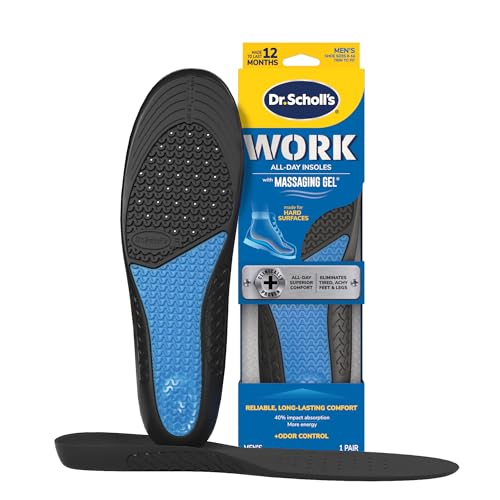 | Best Overall | Cushion: Extended massaging gel | Fit: Trim to fit, full length | Support: Shock absorption, not shell | VIEW LATEST PRICE | Read Our Analysis |
| WalkHero Heavy Duty Arch Support Insoles |  | Best for 220+ lb Workers | Arch: Rigid orthotic shell | Rated for: 220+ lb wearers | Base: 2mm high-density EVA | VIEW LATEST PRICE | Read Our Analysis |
| WalkHero Plantar Fasciitis Insoles | 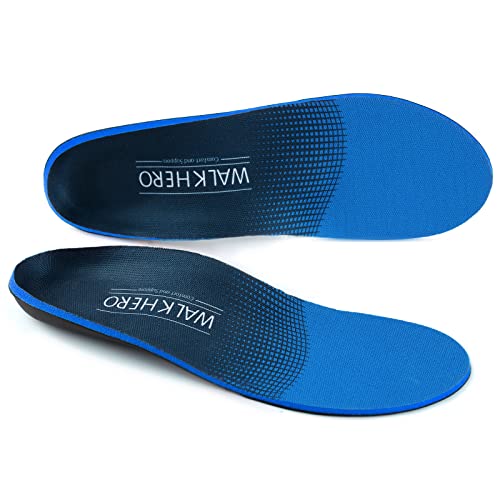 | Best for Heel and Arch Pain | Arch: Firm contoured support | Heel: Deep heel cup | Material: EVA shock absorption | VIEW LATEST PRICE | Read Our Analysis |
| PowerStep Pinnacle |  | Best Firm Orthotic | Support: Podiatrist-recommended shell | Heel: Cushioned heel cradle | Fit: Sold by shoe size | VIEW LATEST PRICE | Read Our Analysis |
| Dr. Scholl's Heavy Duty Support Insoles |  | Best for Wide Feet | Designed for: 200+ lb, wide feet | Heel: Extra heel cushioning | Fit: Trim to fit, full length | VIEW LATEST PRICE | Read Our Analysis |
| Timberland PRO Anti-Fatigue Insole |  | Best for Work Boots | Type: Work boot replacement footbed | Tech: Anti-Fatigue Technology | Fit: Sold by size range | VIEW LATEST PRICE | Read Our Analysis |
| Superfeet All-Purpose Support High Arch |  | Best for High Arches | Arch: High arch profile cap | Heel: Sculpted deep heel cup | Fit: Trim to fit | VIEW LATEST PRICE | Read Our Analysis |
- Best overall: Dr. Scholl’s Work All-Day Superior Comfort Insoles
- Best for 220+ lb workers: WalkHero Heavy Duty Arch Support Insoles
- Best for heel and arch pain: WalkHero Plantar Fasciitis Insoles
- Best firm orthotic: PowerStep Pinnacle
- Best for wide feet: Dr. Scholl’s Heavy Duty Support Insoles
- Best for work boots: Timberland PRO Anti-Fatigue Insole
- Best for high arches: Superfeet All-Purpose Support High Arch
Detailed Reviews
More Details on Our Top Picks
Dr. Scholl's Work All-Day Superior Comfort Insoles
This is the insole most people on their feet all day should try first, and not because it is the most supportive one here. It is the one with the widest margin of error. The build is a full-length foam base with extended massaging gel through the heel and forefoot, and it is trim-to-fit, so it drops into everything from a nursing clog to a steel-toe boot without a size hunt. Dr. Scholl’s markets it on shock absorption rather than correction, which is the honest description: it takes the sting out of concrete and tile, and it will not fight your foot the way a rigid orthotic can on day one.
What you give up is structural arch control. If your arch collapses inward under load, or you are past roughly 200 lb, gel cushioning alone compresses faster than you would like and the support underneath is modest. Treat this as the comfort-first option for a normal arch on a hard floor, and step up to a shell-based insole below if the pain is in your arch rather than your heel pad. A women’s version is available as a separate listing.
- Cushion:Extended massaging gel
- Fit:Trim to fit, full length
- Support:Shock absorption, not shell
WalkHero Heavy Duty Arch Support Insoles
Most insole reviews quietly assume a 160 lb wearer. This one does not: WalkHero builds this version specifically for people over 220 lb, and that changes the whole construction. The arch is a rigid orthotic shell rather than molded foam, so it holds its shape under a load that would flatten a gel insert within a month, and it sits on a full-length high-density EVA layer for shock absorption rather than plush softness.
The trade-off is the usual one with rigid support: it feels aggressive for the first few days, especially if your last insole was foam. Break it in over a few short shifts before committing to a twelve-hour day. If you are heavier and also dealing with heel pain, this is the pick that addresses both the load and the arch at once, which most budget insoles do not.
- Arch:Rigid orthotic shell
- Rated for:220+ lb wearers
- Base:2mm high-density EVA
WalkHero Plantar Fasciitis Insoles
If the pain that sends you looking for insoles is the classic first-steps-in-the-morning heel stab, cushioning is not the answer and a deep heel cup is. This WalkHero model pairs a firm contoured arch with a deep heel cup that keeps the fat pad under your heel where it belongs instead of letting it spread sideways on impact, and the EVA body handles the shock load. It also carries the strongest Amazon sales rank of anything in this lineup, which says the price-to-relief ratio lands for a lot of people.
Set expectations properly: an insole manages plantar fasciitis, it does not cure it, and it works best alongside calf and plantar fascia stretching. Our fuller breakdown of that category is in the best insoles for plantar fasciitis guide.
- Arch:Firm contoured support
- Heel:Deep heel cup
- Material:EVA shock absorption
PowerStep Pinnacle
PowerStep is the brand that turns up when a podiatrist suggests something off the shelf before going custom, and the Pinnacle is its everyday model. Unlike the trim-to-fit crowd, it is sold in shoe-size increments, so the arch apex lands where your arch actually is rather than wherever the scissors left it. You get a supportive shell with a cushioned heel cradle on top, which is the combination that lets a firm orthotic stay wearable for a full shift.
It is several times the price of the drugstore options above, and it is bulkier, so it needs a shoe with a removable factory insole and some depth. In a slim sneaker it will make the shoe feel a half size small. For anyone whose feet are the limiting factor in their job, it is the one on this list most likely to still be doing its job a year from now.
- Support:Podiatrist-recommended shell
- Heel:Cushioned heel cradle
- Fit:Sold by shoe size
Dr. Scholl's Heavy Duty Support Insoles
Dr. Scholl’s designs this one for wearers over 200 lb, taller frames and wide-width feet, and the width is the part that matters most. A standard insole trimmed to fit a wide shoe ends up with the arch support sitting too far inboard, which is why plenty of wide-footed workers conclude that arch support “does not work for them”. This version is cut wider from the start and adds extra heel cushioning to deal with the higher impact load a heavier wearer puts through every step.
It is still a foam-and-cushion insole rather than a rigid shell, so think of it as the wide-fit counterpart to the Work All-Day above rather than an orthotic. If you need genuine correction in a wide shoe, the WalkHero heavy duty model is the firmer alternative.
- Designed for:200+ lb, wide feet
- Heel:Extra heel cushioning
- Fit:Trim to fit, full length
Timberland PRO Anti-Fatigue Insole
Work boots are their own problem. They are deep, they are stiff, and the factory footbed is usually the cheapest component in the boot. Timberland PRO’s replacement footbed is built for exactly that space, using the geometry of its Anti-Fatigue Technology cones to return some energy instead of letting the sole sit dead under your heel. Because it is sold in size ranges rather than as a trim-to-fit sheet, it seats properly in a boot rather than bunching at the toe.
Order carefully: the size ranges are broad, and the insole is thick enough that it will noticeably tighten a boot that already fits snugly. If your work footwear is boots rather than shoes, our best insoles for work boots guide compares more options built for that depth.
- Type:Work boot replacement footbed
- Tech:Anti-Fatigue Technology
- Fit:Sold by size range
Superfeet All-Purpose Support High Arch
High arches fail the opposite way to flat feet. Instead of collapsing, they stay rigid and refuse to spread the load, so all the pressure concentrates under the heel and the ball of the foot. Superfeet’s high-arch model, the long-running green one, answers that with a tall structured stabilizer cap under a sculpted deep heel cup, which fills the space under the arch rather than trying to lift it. It is trim-to-fit and famously durable.
Two caveats. It is thinly cushioned by design, so if you want a plush feel underfoot this is the wrong insole. And a high-arch profile in a low-arched foot is genuinely uncomfortable, so check your arch height before buying this one rather than a neutral model.
- Arch:High arch profile cap
- Heel:Sculpted deep heel cup
- Fit:Trim to fit
How to Choose Insoles for Standing All Day
Four things decide whether an insole survives your shift.
- Support versus cushioning. Cushioning absorbs impact; support changes how load is distributed. Heel-pad pain and hard floors call for cushioning. Arch ache, overpronation and leg fatigue call for a shell.
- Your body weight. This is the variable most guides skip. Above roughly 200 lb, foam-only insoles compress within weeks. Look for products that state a weight rating.
- Arch height. A high-arch insole under a flat foot hurts, and a flat insole under a high arch does nothing. Wet a foot, stand on cardboard and look at the print: a full footprint means low arch, a thin band means high.
- Shoe volume. Any insole with a real shell is thicker than the sticker it replaces. Remove the factory insole first, and expect a snug shoe to become a tight one.
Insoles for Nurses, Retail Workers and Warehouse Staff
The job changes the answer more than most product roundups admit.
- Nursing and healthcare. Twelve-hour shifts with short bursts of fast walking, on hard floors, usually in clogs or cushioned sneakers that already have some midsole. A trim-to-fit cushioned insole normally does the job here. See our picks for Hoka shoes for nurses if the shoe itself is the weak link.
- Retail and hospitality. Mostly static standing on tile, often in shoes with a thin sole and no removable footbed. Cushioning plus a moderate arch matters more than maximum correction. More on footwear in our best shoes for retail workers guide.
- Warehouse and industrial. Concrete, distance, heavier loads and safety boots. This is shell-and-heavy-duty territory, and boot-specific footbeds beat trim-to-fit sheets. Pair with the right boot from our warehouse work footwear picks.
How Often Should You Replace Work Insoles?
For someone standing all day, plan on six to twelve months. The failure is gradual, so watch for the signs rather than the calendar: the arch no longer springs back when you press it, the heel area has a permanent dent, or the pain you originally solved starts returning in the last hours of a shift. Foam-based insoles sit at the short end of that range and heavier wearers shorten it further; shell-based orthotics like the Superfeet and PowerStep models last longest because the structural part is plastic rather than foam.
Frequently Asked Questions
Do insoles actually help when you stand all day?
Yes, for two different reasons. A cushioned insole reduces the peak impact travelling into the heel on hard floors, and a supported arch stops the foot from slowly flattening across a shift, which is what produces the ache that spreads into the calves and lower back by hour eight. The gain is largest when the insole replaces a thin factory footbed, which is the case in most work shoes and boots.
Should insoles for standing be soft or firm?
Firm underneath, cushioned on top. A soft insole feels better in the shop and collapses within weeks under all-day standing, leaving you with nothing. The combination that lasts is a supportive shell or dense base with a thin cushioning top layer. Pure gel is best treated as heel-pad protection rather than support.
What insoles are best for standing all day on concrete?
Concrete gives back nothing, so you want both shock absorption and structure. Full-length insoles with a firm arch and a deep heel cup handle it best, and heavier workers should choose a model with a stated weight rating rather than a standard foam insert. In safety boots, a boot-specific footbed seats better than a trimmed sheet.
Can I use running insoles for work?
You can, but they are tuned for a different load. Running insoles favor lightweight cushioning and forefoot flexibility for a moving foot, while standing all day loads the heel and arch statically for hours. A work or all-day model with more arch structure and a deeper heel cup is usually the better match.
Do I need to remove the original insole first?
Almost always, yes. Stacking a new insole on top of the factory one raises your heel out of the heel counter, tightens the shoe and puts the arch support in the wrong place. If the original footbed is glued in and cannot be removed, choose a thin three-quarter length insole instead of a full-length one.